
|
About Temperaments •
Pythagorean •
Meantone •
Modified Meantone •
Well •
Victorian Well • Quasi-Equal • Equal • Modern Well • |
|
Click on a topic above to see a list of subtopics here... |
...and click on a subtopic to see text or graphics here.This page is about 4 MB, and it depending on your connection speed it may take an eon to load, so I am working out how to break it up; but meanwhile the charts are so much richer that I want to make it available. The one page contains 75+ images, each over 60k, plus thumbnails. Suggestions to speed things up: if you are using Internet Explorer, once this page has loaded you can "add to Favorites" and on that dialog box you can click "Make available offline." This will store all the images on your computer.
|
Copyright 2002, Jason Kanter, Orcas Island Tuning, jkanter@rollingball.com
Why bother?
Homage to Jorgensen
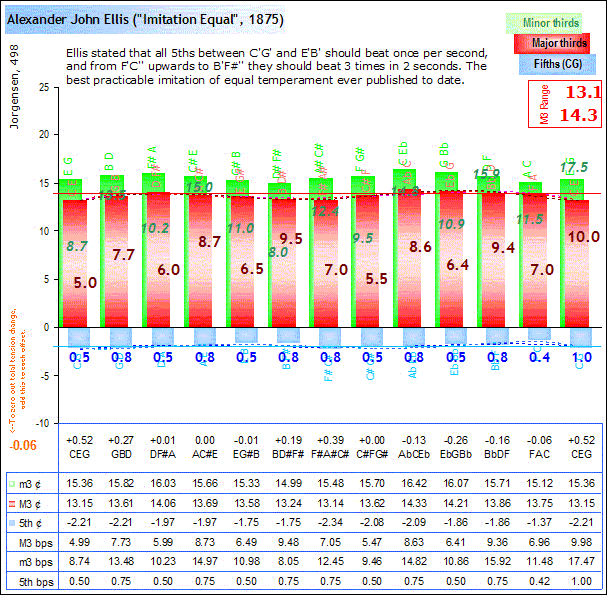
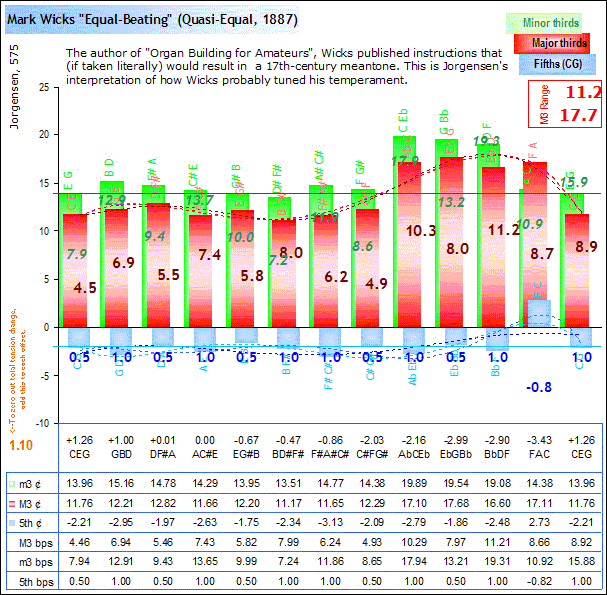
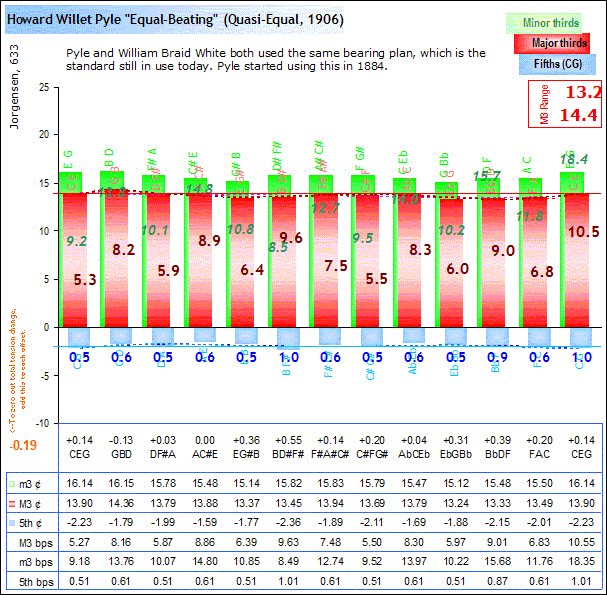
Reading the Charts
Most of the information in this website is cheerfully lifted from Owen Jorgensen's monumental tome, Tuning: Containing The Perfection of Eighteenth-Century Temperament; The Lost Art of Nineteenth-Century Temperament; and The Science of Equal Temperament. To save space, I have summarized Jorgensen's wording and decided in many places to eliminate quotation marks and just admit at the outset that it is all taken from his book. Each image contains a citation for the source of the information, generally a page in Jorgensen.
I must say that as a professional organizer of information, I am staggered by the amount of research that Jorgensen managed to capture. It is regrettable that the book has gone out of print. My effort here should be thought of as a supplement to Jorgensen. There may be places where I have misinterpreted the data, and I take full responsibility for that.
There are temperaments here that you will not find in Jorgensen: Coleman, Bailey, Koval, Wendell, Bremmer, and Jorgensen's own improvement on Kirnberger/Prinz. In each case I have made comments drawn from personal emails or website postings. Again, if I have misrepresented anything, please let me know and I will promptly fix it.
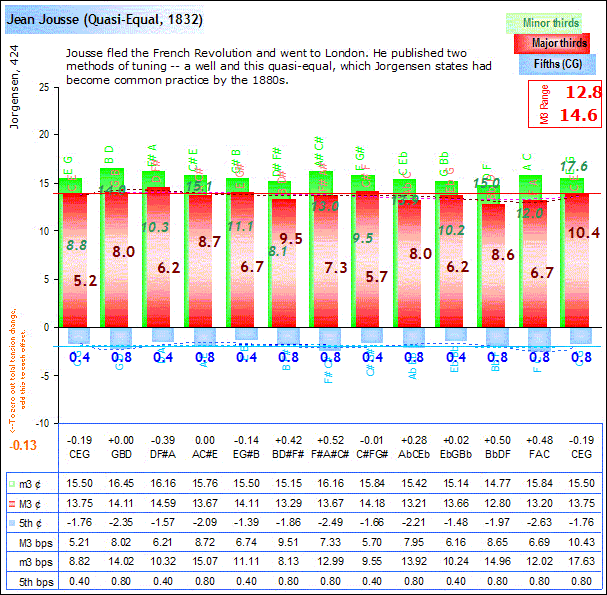
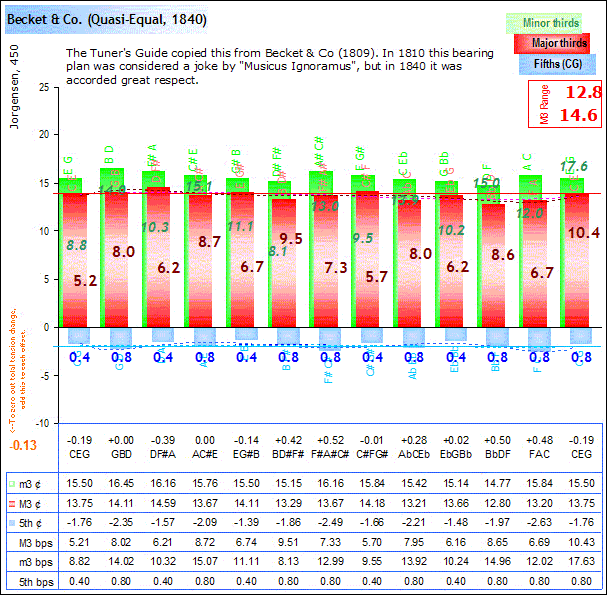
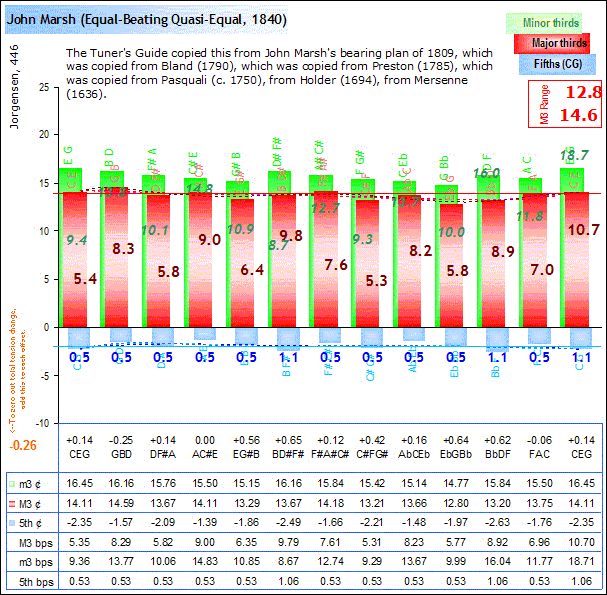
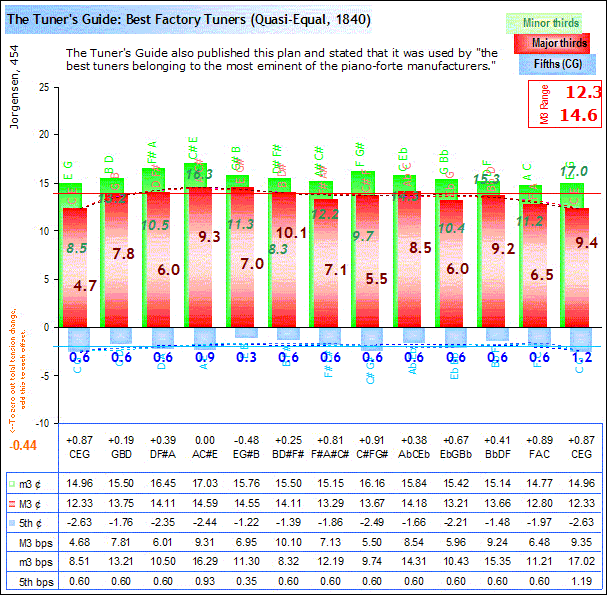
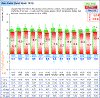
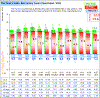
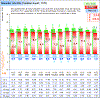
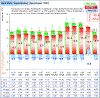
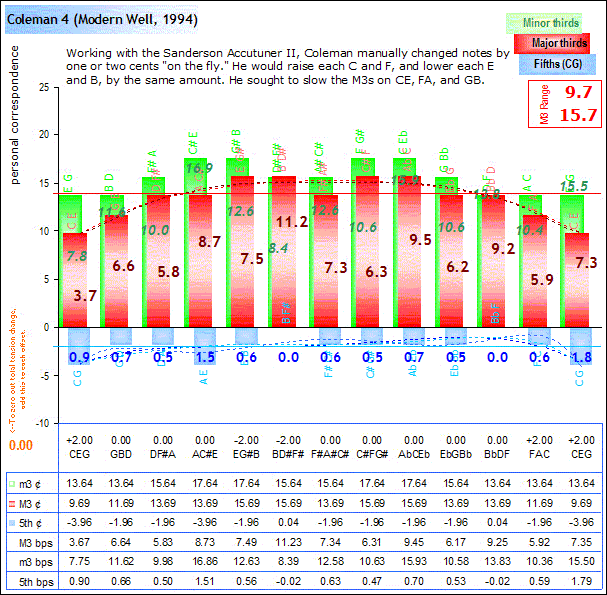
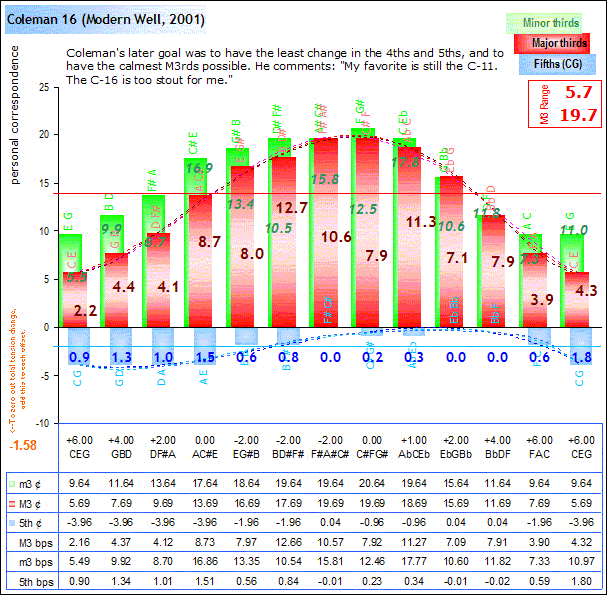
The charts display thirteen major triads in a cycle of fifths, starting with the C3E3G3 triad at the left and proceeding up by fifths and down by fourths until you reach C4E4G4 at the right.
The bars indicate cents; the numbers represent beats.
Fifths are blue; major thirds are red; minor thirds are light green. [Technically, the minor third bars should be shown below zero, since minor thirds are contracted (not expanded like thirds and fourths). But I think they look better behind the major thirds.]
The minor third of EG and the major third of CE are thus seen together. The "feeling" of C Major is represented in the mingling beat rates of the CG fifth, the CE M3, and the EG m3. Let us suppose that when those beats are synchronous (equal or in whole-number ratios such as 3:2) ... so that they are beating together ... there is something that happens to the soul of the listener. Enough said about this.
Immediately below each triad is the offset for the fundamental of that triad.
There is a red "horizon" line (ET reference line) representing 13.7 cents, the Equal Temperament M3. The dotted curves are polynomial trendlines that help to show the degree of balance in the temperament. The large red numbers in the upper right of the chart indicate the minimum and maximum size of the Major Thirds (in cents). This can serve as a quick guide to the degree of key coloring in the temperament.
These are busy charts, and there is some overlapping data. Below the graph is a data table that shows every number in the graph. Watch this space for an announcement of a printed reference guide containing all these charts (and more) in high-resolution, 11 x 8.5 format.
Answer to Question 3
Favors pure fifths.
Thumbnails
Boulliau (1373)
Grammateus (1518)
Neidhardt (1732)
Neidhardt-Marpurg-De Morgan (1858)
Moscow (1895)


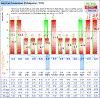
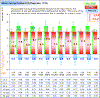
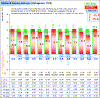

Favors pure thirds. The Wolf becomes a factor. Eight keys are playable.
Thumbnails
Aaron (1523)
Zarlino (1558)
Huygens (1661)
Holder (1694)
Keller (1707)
Silbermann (1714)
Smith (1749)
Romieu (1755)
Holden (1770)
Marsh (1809)


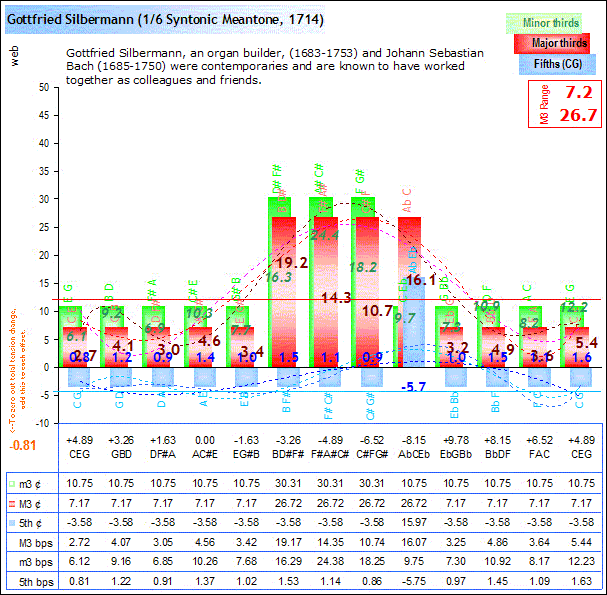


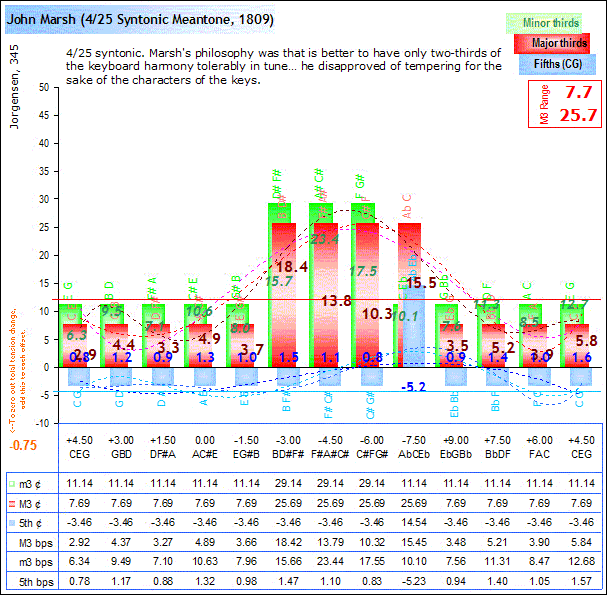


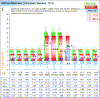
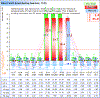
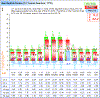
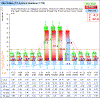
Attempting to mitigate the Wolf and get nine playable keys. This is a transition to Well.
Thumbnails
D'Alembert (1752)
Britannica (1797)
Hawkes (1807)
Fisher (1818)


Key Color emerges as all 24 keys can be used.
Thumbnails
Werckmeister (1691)
Prelleur (1731)
Tans'ur (1746)
D'Alembert (1752)
Rousseau Equal-Beating (1768)
Rousseau Theoretical (1768)
Kirnberger (1771)
Handel (1780)
Vallotti (1781)
Preston Equal-Beating (1785)
Preston Theoretical (1785)
Young (1799)
Vallotti-Young (1799)
Stanhope Equal-Beating (1806)
Stanhope Theoretical (1806)
Bemetztrieder (1808)
Prinz Equal-Beating (1808)
Prinz Theoretical (1808)
Jousse (1832)
Kellner (1978)
Jorgensen's Prinz (2002)


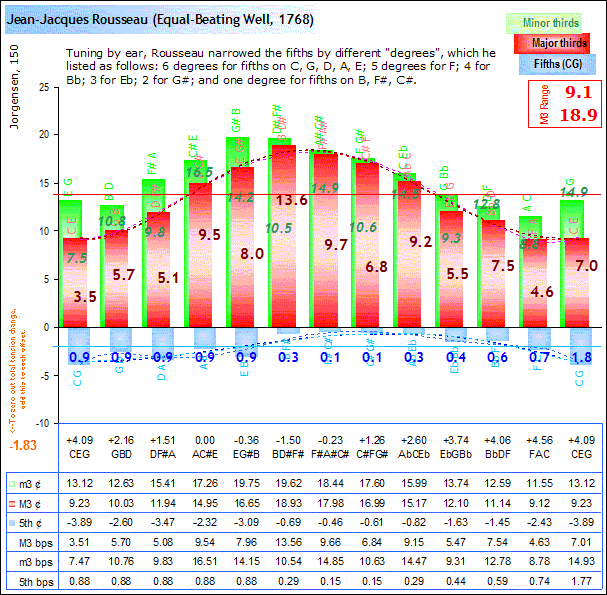


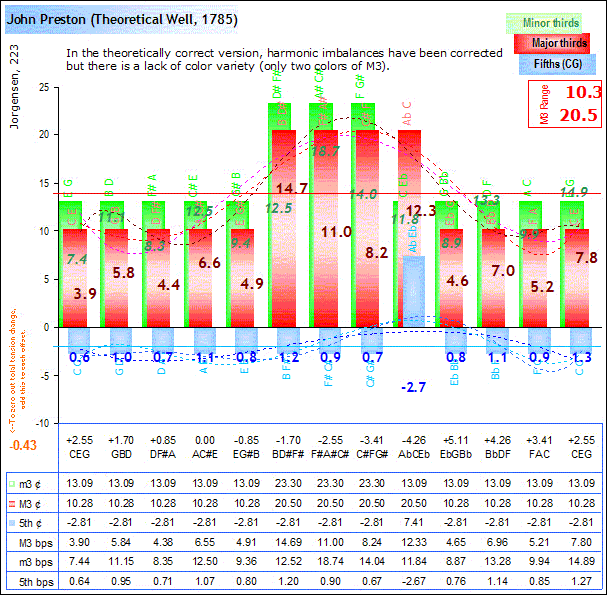

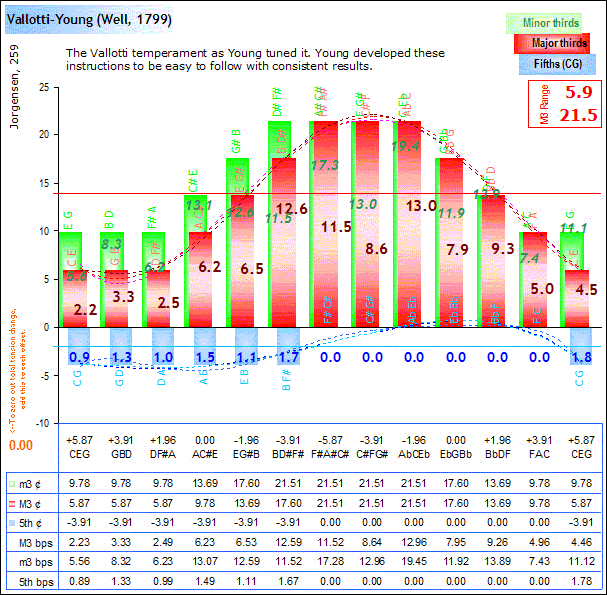
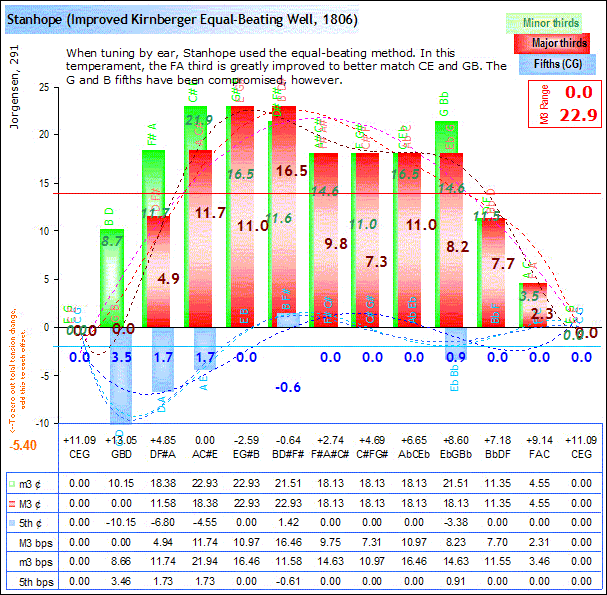


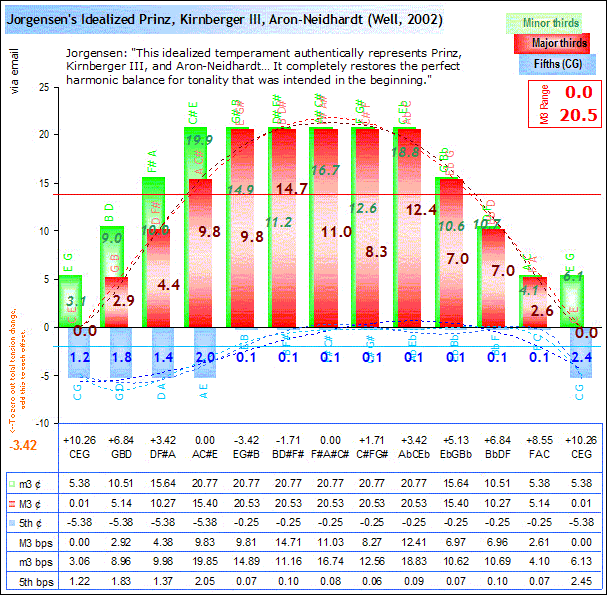


While maintaining key color, objectionable thirds are toned down.
Thumbnails
Tuner's Guide #1 (1840)
Tuner's Guide #2 (1840)
Tuner's Guide #3 (1840)
De Morgan (1843)
Broadwood's Best (1885)
Broadwood's Usual (1885)
Moore (1885)
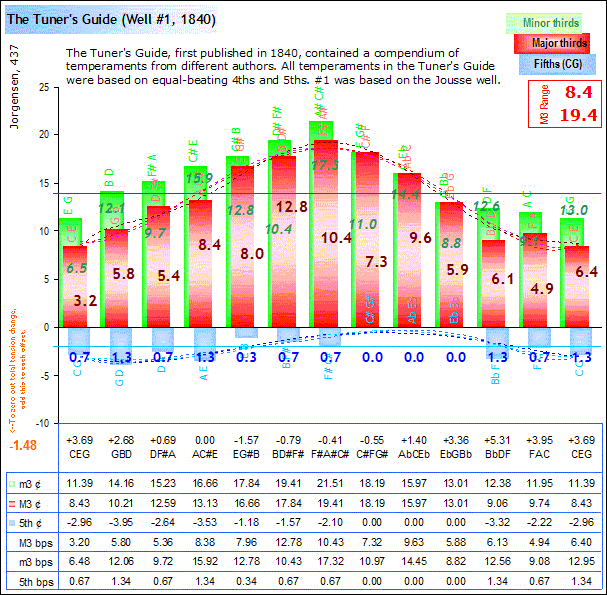


Conceptually driving for equal temperament, without the critical understanding of where to listen for beat rates.
Thumbnails
Merrick (1811)
Graupner (1819)
Hummel (1829)
Viennese (1829)
Jousse (1832)
Becket (1840)
Marsh (1840)
Best Factory (1840)
Ellis (1875)
Ellis (1885)
Broadwood (1885)
Wicks (1887)
Pyle (1906)

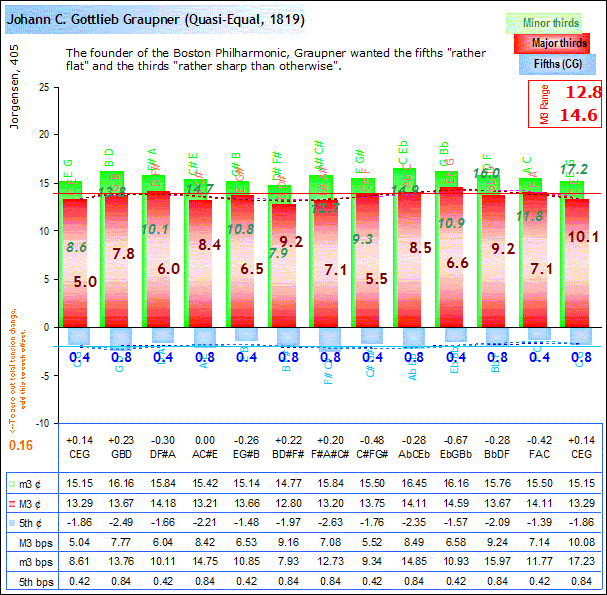











The first mathematically sound method of tuning truly equal temperament appeared in 1911.
Equal

With the advent of electronic tuning devices, there has been a resurgence of key color in a variety of well temperaments.
Thumbnails
Di Veroli (1978)
Bailey (1993)
Bailey (2002)
Coleman 4 (1994)
Coleman 10 (2001)
Coleman 11 (1999)
Coleman 16 (2001)
Koval Variable 1.5 (2002)
Koval Variable 3.0 (2002)
Wendell (2002)
Kellner/2
Young/2
Jorgensen's Prinz/2
Jorgensen's Prinz/3






A controversial temperament worthy of its own category.
Coleman 10